

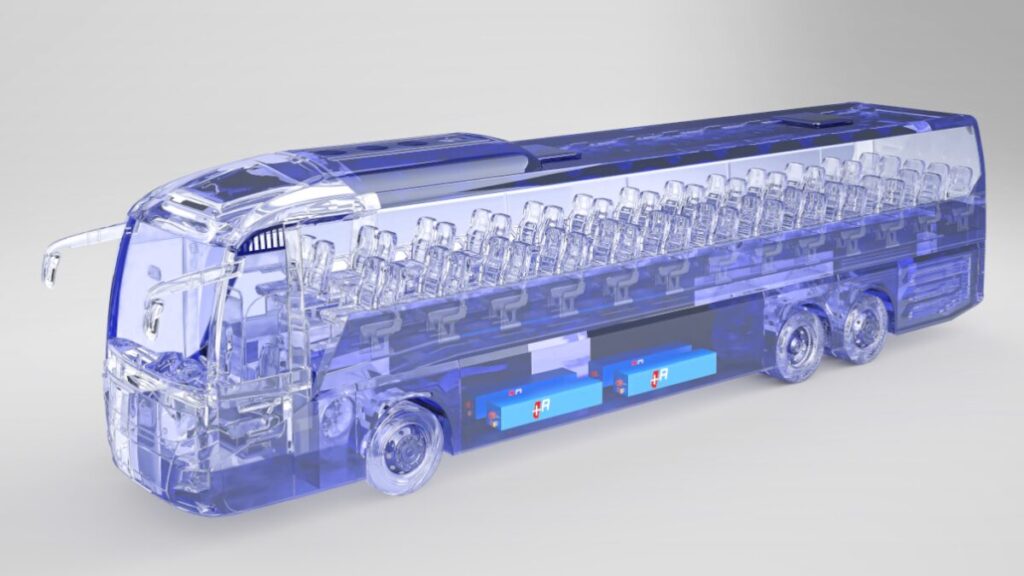

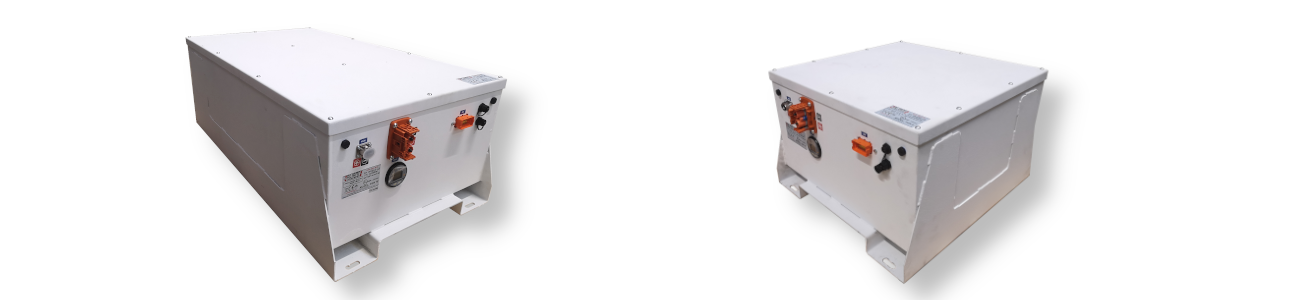
Aliant Battery has achieved a highly prestigious milestone: ECE R100 certification on four lithium-ion battery models. This international recognition testifies to the quality, safety and innovation of our electric mobility solutions. We are among the few Italian manufacturers to boast this certification on multiple products, confirming our ongoing commitment to high standards and reliability for our customers and partners.
ECE R100 is a European standard that defines safety requirements for high-voltage batteries used in electric and hybrid vehicles. Created in response to the growing popularity of electric mobility, this standard ensures that batteries installed in vehicles meet strict criteria in terms of safety, performance and resistance to extreme situations.
History:
ECE R100 was introduced by the United Nations Economic Commission for Europe (UNECE) to harmonize rules on electric vehicle safety among member countries, thus facilitating the spread of clean and safe technologies. Over the years, the standard has been updated (we are currently at “Revision 2”), including increasingly stringent and detailed testing.
ECE R100 certification applies to several categories of vehicles. Here is an overview of the main classes according to the European classification:
M1:
Passenger cars with a maximum of 8 seats in addition to the driver. Example: private cars, cabs.
N1:
Vehicles intended for the transport of goods, with a maximum mass not exceeding 3.5 tons. Example: vans, small commercial vehicles.
CATEGORY |
DESCRIPTION |
|---|---|
|
L |
Motorcycles |
|
M |
Motor vehicles for passenger transport and having at least four wheels |
|
N |
Motor vehicles for goods transport, having at least four wheels |
|
O |
Trailers and semi-trailers |
|
Sx |
Special-purpose vehicles |
|
T |
Agricultural and forestry tractors |
Mechanical and thermal tests
1. Vibration
The battery is subjected to vibrations that simulate typical stresses during vehicle operation. The test uses a sinusoidal profile with frequency variation from 7 to 50 Hz and return to 7 Hz, with a maximum acceleration of 10g. The total duration of the test is 3 hours.
2. Thermal Shock and Temperature Cycles
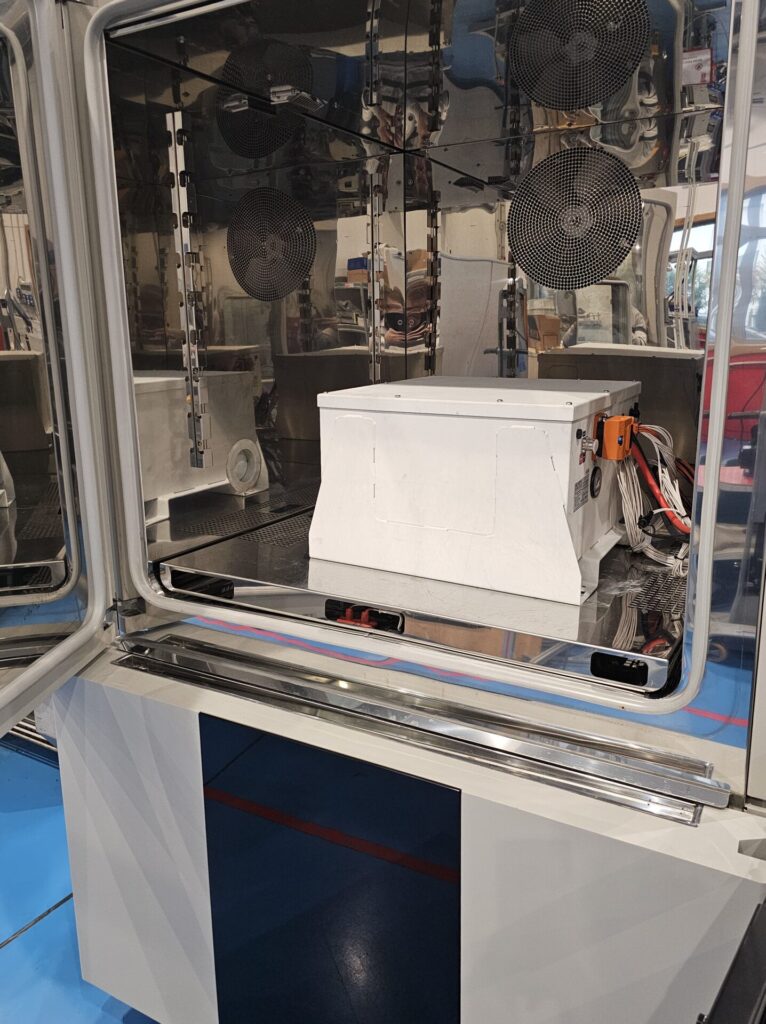
This test verify the battery’s resistance to rapid temperature changes. The battery is exposed alternately to -40 °C and +60 °C, maintaining each temperature for 6 hours. The cycle is repeated 5 times consecutively.
3. Mechanical Shock
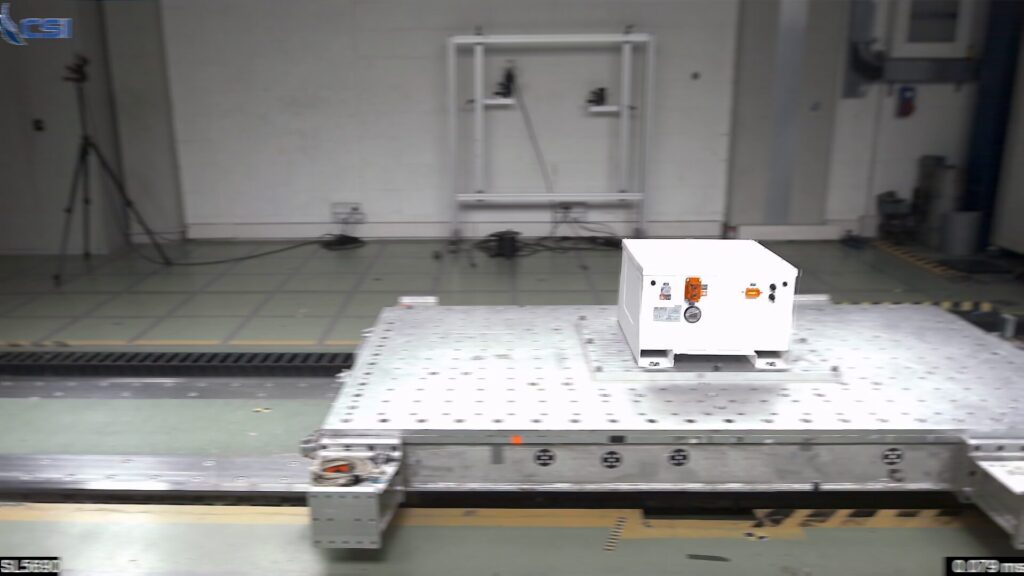
The battery is subjected to pulsed acceleration, to simulate the stresses that may occur in an accident. Each pulse has a duration of 80 milliseconds and a maximum acceleration of 28g, applied in both longitudinal and transverse directions.
4. Mechanical Integrity
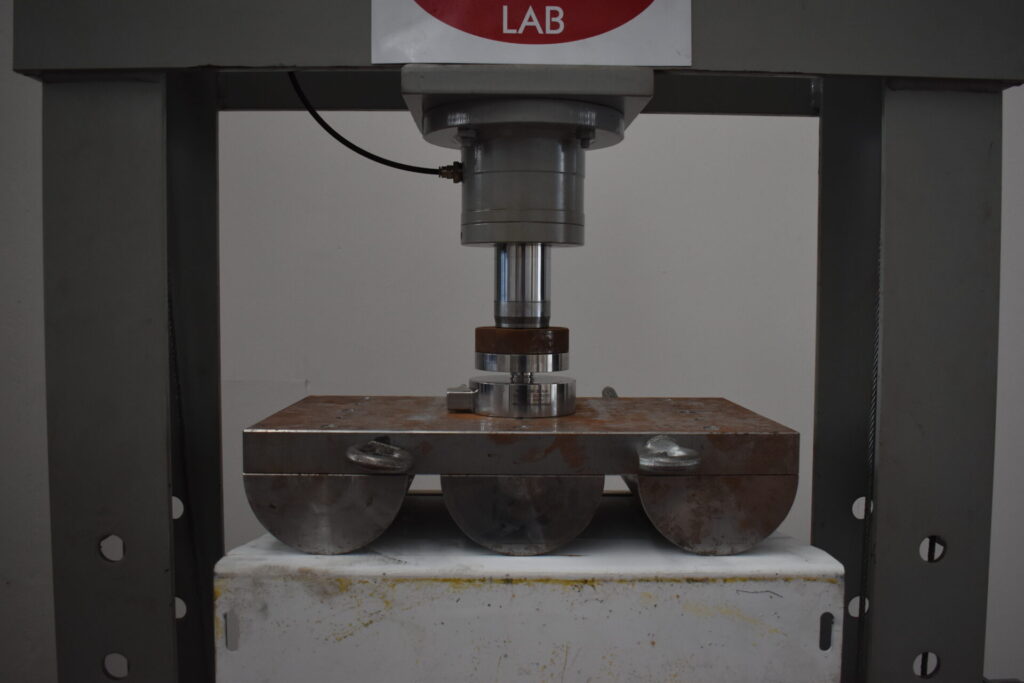
To evaluate the resistance of the battery to crushing stress, it is compressed between two plates with a load between 100 and 105 kN.
5. Fire Resistance
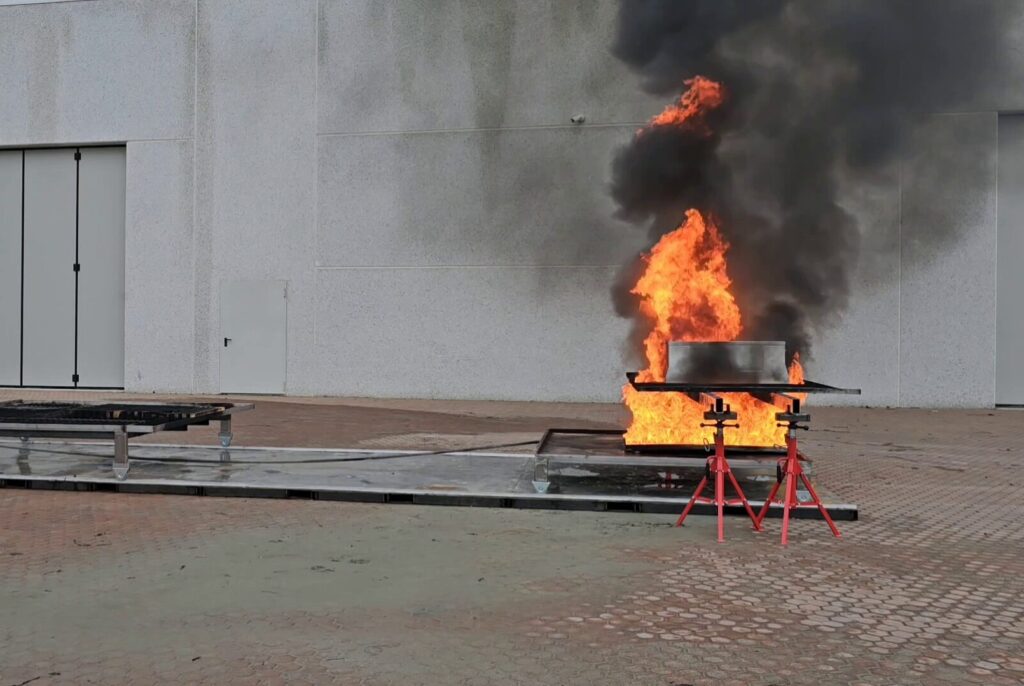
The battery is exposed to a direct flame for 70 seconds, followed by an indirect exposure phase (by shielding with refractory bricks) for another 60 seconds. The goal is to verify that the battery does not explode and that no hazardous spills occur, ensuring sufficient time for passenger evacuation in the event of a fire.
Electrical Test
6. External Short Circuit Protection
The safety of the battery in case of direct connection between the positive and negative poles is verified by simulating an external short circuit.
7. Over-charge Protection
The battery is charged beyond the prescribed limits to ensure that the protection system intervenes promptly, interrupting charging when the safety threshold is reached.
8. Over-discharge Protection
The battery is discharged beyond allowable limits to verify that the protection system blocks the discharge before conditions hazardous to safety and system integrity are reached.
9. Over-temperature Protection
Through repeated charge and discharge cycles, the internal temperature of the battery is raised to the maximum threshold set by the manufacturer. It is verified that the protection system stops charging and/or discharging when this threshold is reached.
10. Over-current Protection
The charging current is increased beyond the maximum expected value to ensure that the battery is able to stop charging if the safety limit is exceeded.



Having ECE R100 certification means offering customers and practitioners an internationally recognized guarantee of safety and quality. For those who choose an ECE R100-certified Aliant battery, the benefits are many:
- Increased safety for people and vehicles
- Compliance with European and international standards
- Ease of vehicle approval
- Access to markets and public calls requiring specific certifications
- Market enhancement of the vehicle through certified components
Choosing Aliant Battery means trusting a partner that constantly invests in research, quality and safety.
Want to learn more about our ECE R100 certified batteries?
If you would like to receive more information about the technical features, receive detailed documentation or get personalized advice on Aliant Battery solutions for your project, our team is at your disposal.
Contact us without obligation: we will be happy to answer all your questions and guide you in choosing the best solution for your needs.